
Rapeseed
ID GRAIN, a true expert in high erucic rape & other specific rapeseed
For agricultural and industrial markets, ID GRAIN is a true expert in the cultivation of specific rapeseeds such as High Erucic Acid Rape (HEAR) thanks to its extensive expertise in research and plant breeding, development and innovation, plant production, seed contracting and marketing.
Performance and Competitiveness for ID Grain varieties
High Erucic Acid Rape (HEAR)
ID GRAIN is the European market leader in High Erucic Acid rape (HEAR) thanks to the performance of its RAMSES and ROCCA hybrids.
With its new hybrid REACTIV, ID GRAIN is boosting the economic competitiveness of the crop, particularly by improving yield potential.


00 Rape (Canola)
ID GRAIN offers a range of 00 rapeseed varieties developped through its breeding program.
Our genetic portfolio allows us to meet the different market needs in France, Europe and international markets.

Brassica napus L., Brassicaceae (Brassicaceae – Cruciferous)
As its name suggests, High erucic Acid Rape (HEAR) is rich in erucic acid. A specific breeding program was initiated in the 1960s in order to develop agronomically efficient varieties with high erucic acid content.
With a minimum oil concentration of 45% erucic acid, it possesses strong lubricating and surfactant properties sought after by the green chemistry industry. Its oil helps reduce reliance on fossil fuels for the production of detergents, solvents and lubricants in the fields of agrochemistry, cosmetics, pharmacy and painting.

Industrial uses of HEAR
High Erucic rapeseed is the only oilseed crop in Europe with high yield potential that contains long-chain fatty acids (22-carbon chain, C22). The technical properties of its oil make it suitable for various applications in the oleochemical industry.
Its most important uses include:
- Additives for plastic materials thanks to its “anti-sticking” properties, which prevent plastic films from sticking together.
- Surfactants used among others in cosmetic formulations, anti-caking products for fertilizers, inks or emulsifiers.

Crop Management of High Erucic Acid Rape (HEAR)
The cultivation of HEAR is not fundamentally different from that of a "00" rape. From a historical point of view, HEAR can even be considered the ancestor of today's rapeseed production. As a result, both crops are technically and agronomically similar.
However, some important precautions must be taken - such as field isolation, specific harvesting, and dedicated storage - in order to to ensure the success and quality of the production.
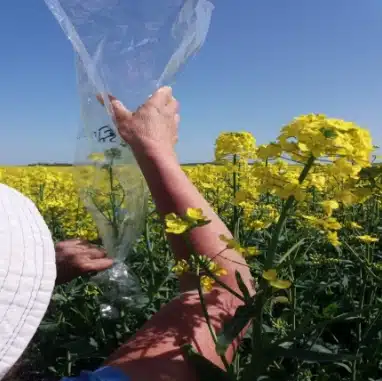
Research and development for HEAR
At ID GRAIN we focus our research efforts on the development and registration of new varieties with high agronomic performance, adapted to current agro-climatic conditions, and rich in both oil and erucic acid.
Today we offer a high-performance range of early hybrid varieties with strong establishment vigor, robust autumn dynamism and high yield potential.
Our genetic diversity allows us to provide varieties suited to the specific conditions of each region and to meet the different needs of French and European farmers. The performance of our products has established us as a leader in the European market.
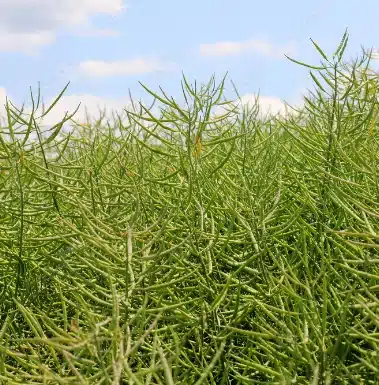
REACTIV, the revival of Erucic Rape (HEAR)
The RAMSES and ROCCA hybrids resulting from our research program have quickly established themselves as leaders in the erucic rapeseed segment in France and Europe.
Our new hybrid REACTIV builds upon and enhances the characteristics of these two flagship varieties, combining high erucic acid content with strong early, robust autumn dynamism and disease tolerance. It brings a significant improvement in the yield potential and economic competitiveness of the crop.

Industrial Partnerships and Contracting for High Erucic Acid Rape (HEAR) grains
ID GRAIN supplies high erucic acid rape seeds to the leading industrial processors specializing in rape seed crushing. We have established a grain production contracting offer in collaboration with french distributors and storage organizations.
Our agronomists are able to support producers throughout the entire cultivation process—from sowing to harvest, storage, quality control and logistics. Our contractual offer is adapted to current market conditions ensuring that this specific grain production remain competitive with conventional crops.
ID GRAIN's high erucic acid rape varieties offer a very good balance of productivity, quality and price for processing seeds into technical oils used in the green chemistry industry.
Brassica napus L., Brassicaceae (Brassicaceae – Cruciferous)
00 Rape (Canola) is the most widely cultivated type of rape in Europe. It is free of erucic acid and ideal for producing high-quality edible oil.
Our breeding program is built on a continuously improving genetic foundation developed over more than 25 years. Our main breeding objectives are to improve yield, vigor, disease resistance, stress and insects tolerance, hardiness and seed quality. Every year, we test our new products in our experimental network in France and across Europe.

ID GRAIN thus offers a range of 00 rape (canola) varieties developed through its own breeding program.
Our hybrid varieties such as MELODIE, COUTRIE and SONIE are distinguished by very good autumn vigor, strong vegetative development and good winter hardiness. This gives them a high level of resistance to different stresses and crop pests, ensuring high yield potential.
Our genetic diversity enables us to meet the diverse needs of farmers and adapt to the specific conditions of each region.
The distribution of our varieties is ensured through a network of partner distributors in France, Europe and international markets.
For our sowing seed production, we rely on an experienced network of seed growers (farmer-multipliers) and seed stations in France. This allows us to market high-quality certified seeds.
Our seeds and grains
High Erucic Acid Rape (HEAR)
OUR SEEDS

OUR GRAINS

00 Rape (Canola)
OUR SEEDS
Learn more about rapeseed

Rapeseed: A key crop for French and European agriculture
Rapeseed is an oilseed plant belonging to the Brassicaceae family. Mainly cultivated for edible and industrial oil production, rapeseed also plays an important role in crop rotation due to its soil-improving properties. In addition to oil, its seeds provide protein-rich cattle cakes used in animal feed.
Rapeseed is an essential crop in France and the European Union, playing a crucial role in the agricultural economy. In France, its cultivated areas cover approximately 1,3 million hectares, making the country one of the main rapeseed producers in Europe. The European Union, cultivates more than 6 million hectares, with production mainly concentrated in Germany, France, Poland and Romania. Its production is driven by a growing demand for its various applications, ranging from human and animal food to green chemistry.

The Role of Rapeseed in Crop Rotations
Rapeseed plays a crucial role in crop rotations and helps improve the yields of subsequent crops.
As a break crop, particularly with cereals such as wheat, it helps to disrupt disease and pest cycles, enhances soil structure and increases biodiversity. Cultivated over approximately 300 days, rapeseed covers the soil from autumn until its harvest in July, contributing to erosion control and effective weed management.
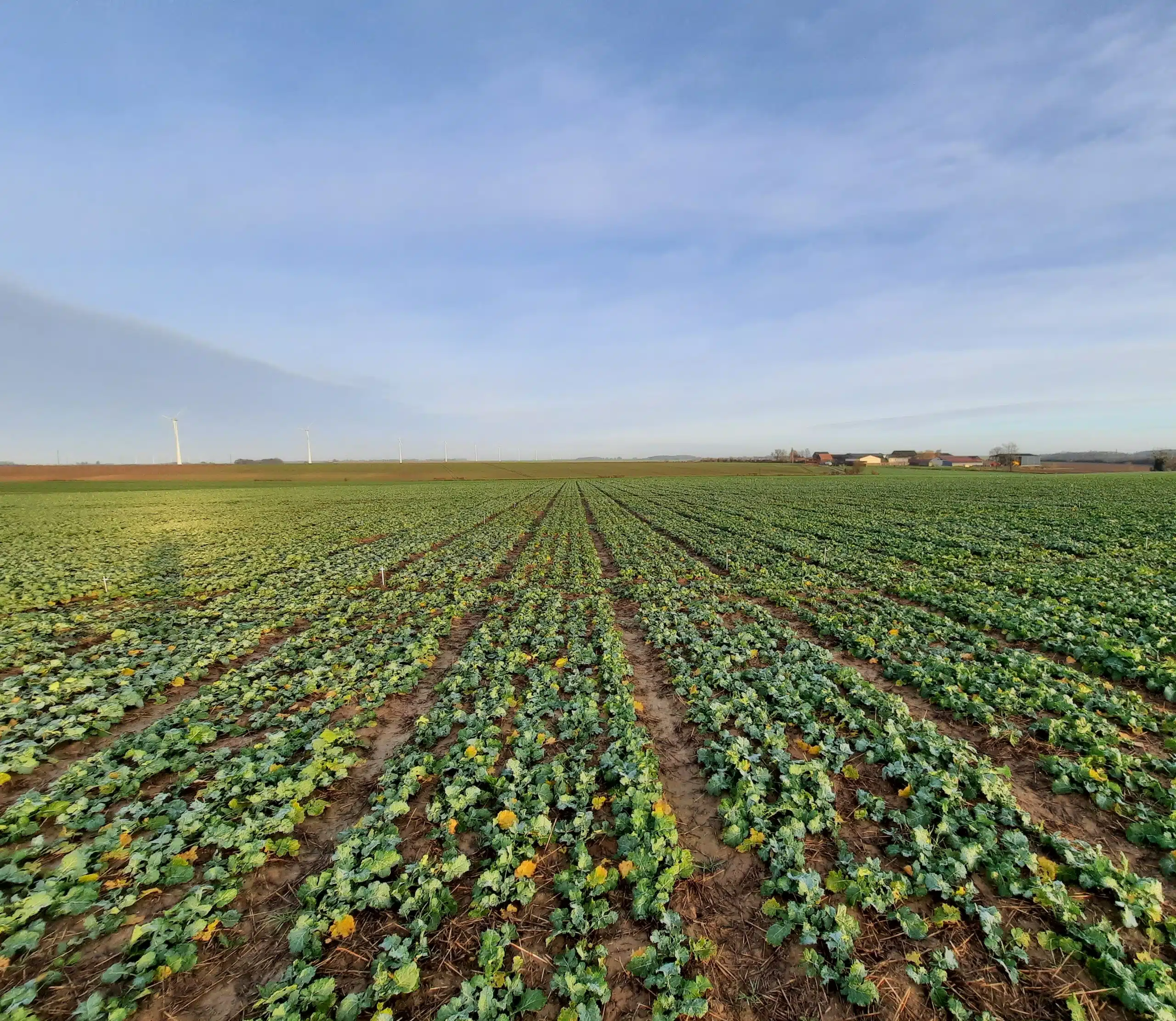
Characteristics of rapeseed varieties
Rape varieties must exhibit several essential traits:
- Consistent Yield: Yield stability is the primary selection criterion, considering local pedoclimatic situation as well as biotic pressures.
- Stress tolerance: Varieties must demonstrate good tolerance to winter cold, diseases and pests, such as the TuYV virus.
- Soil and Climate adaptation: The ability to establish and develop quickly in autumn is crucial to ensure better protection against insects and healthy plant conditions after winter.